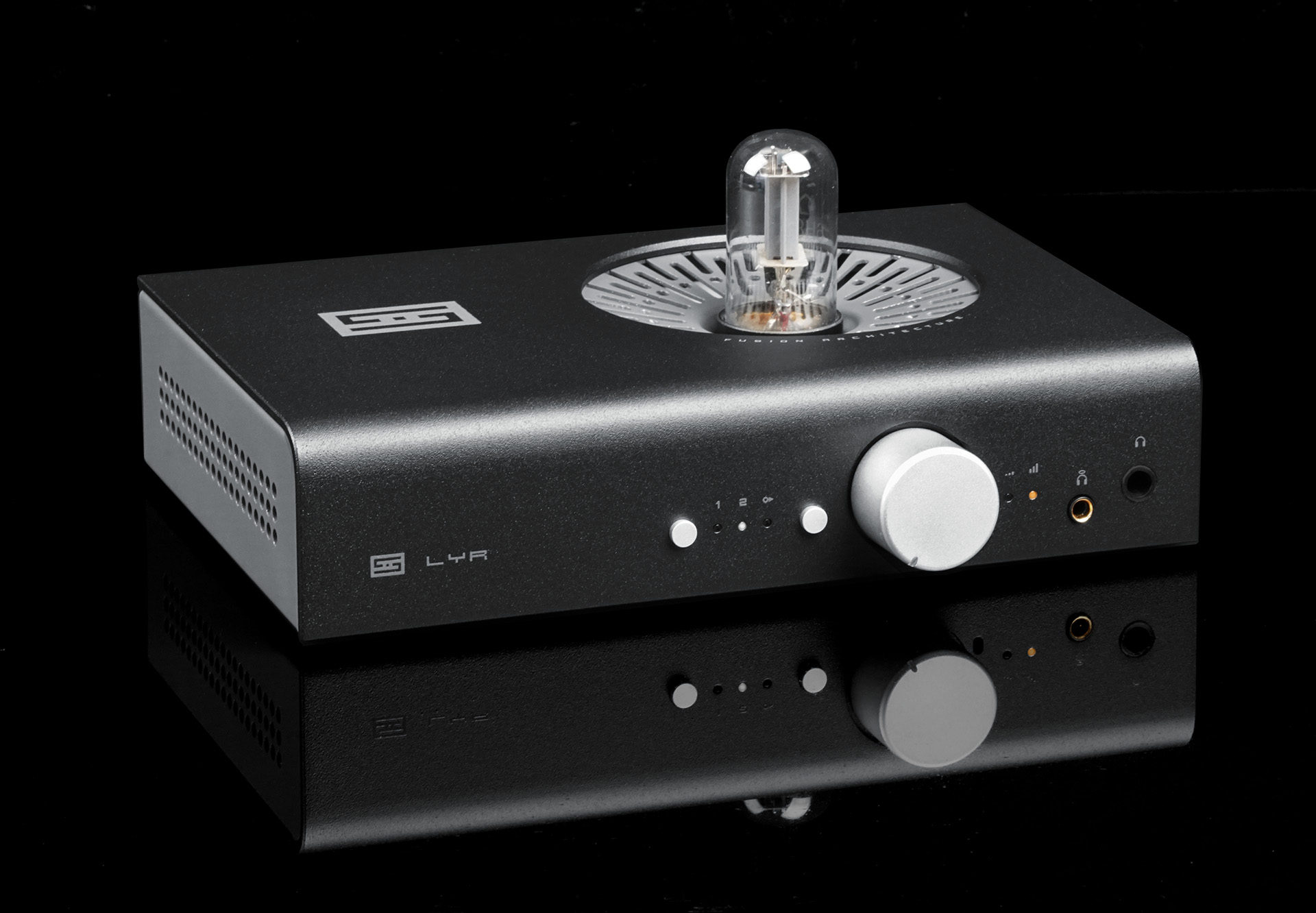
Lyr 5
Forkbeard™-Enabled Fusion™ Headphone Amp & Preamp
$799.00 – $829.00
In stock
Backordered - Shipping by Oct 30
Description
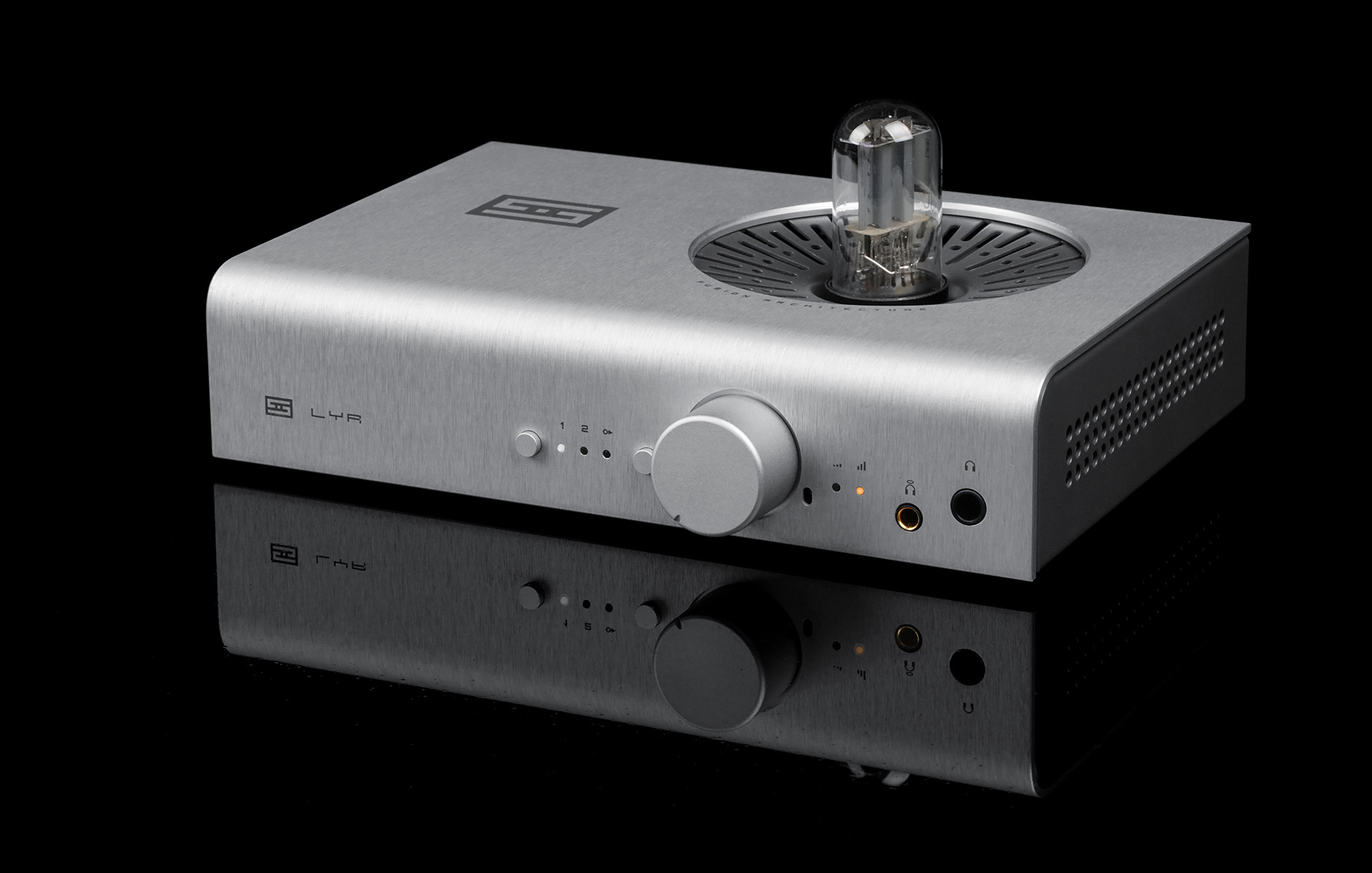
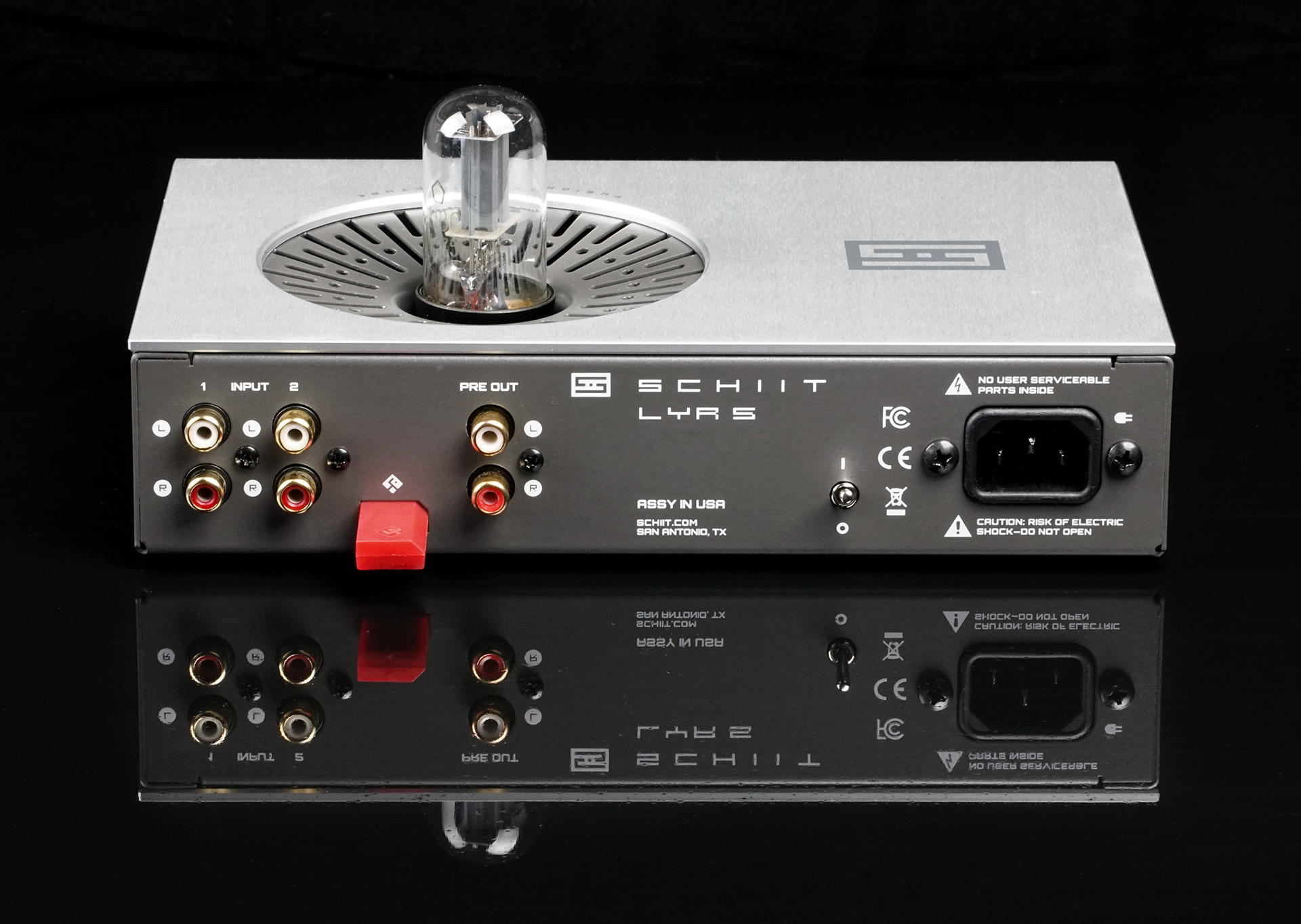
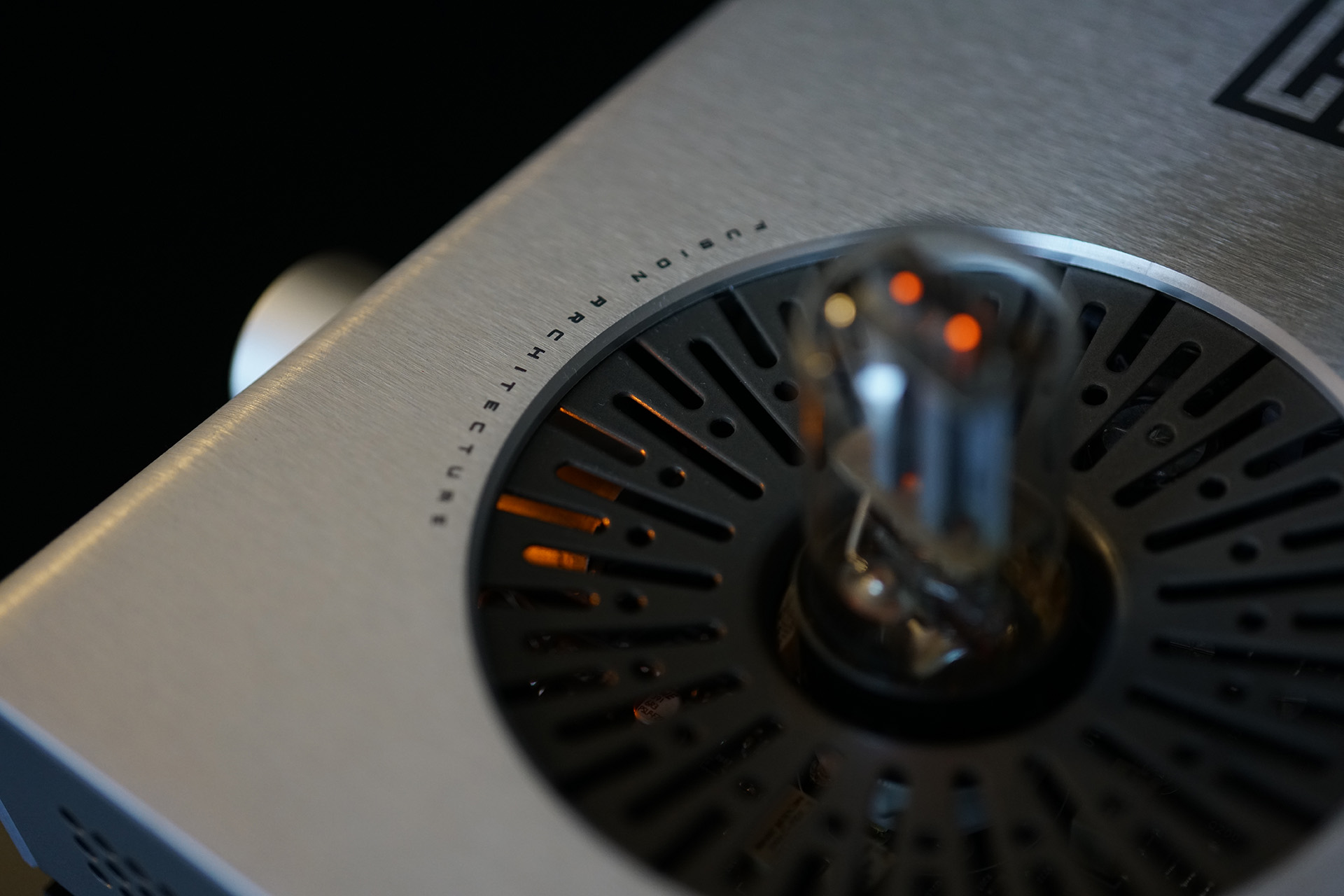
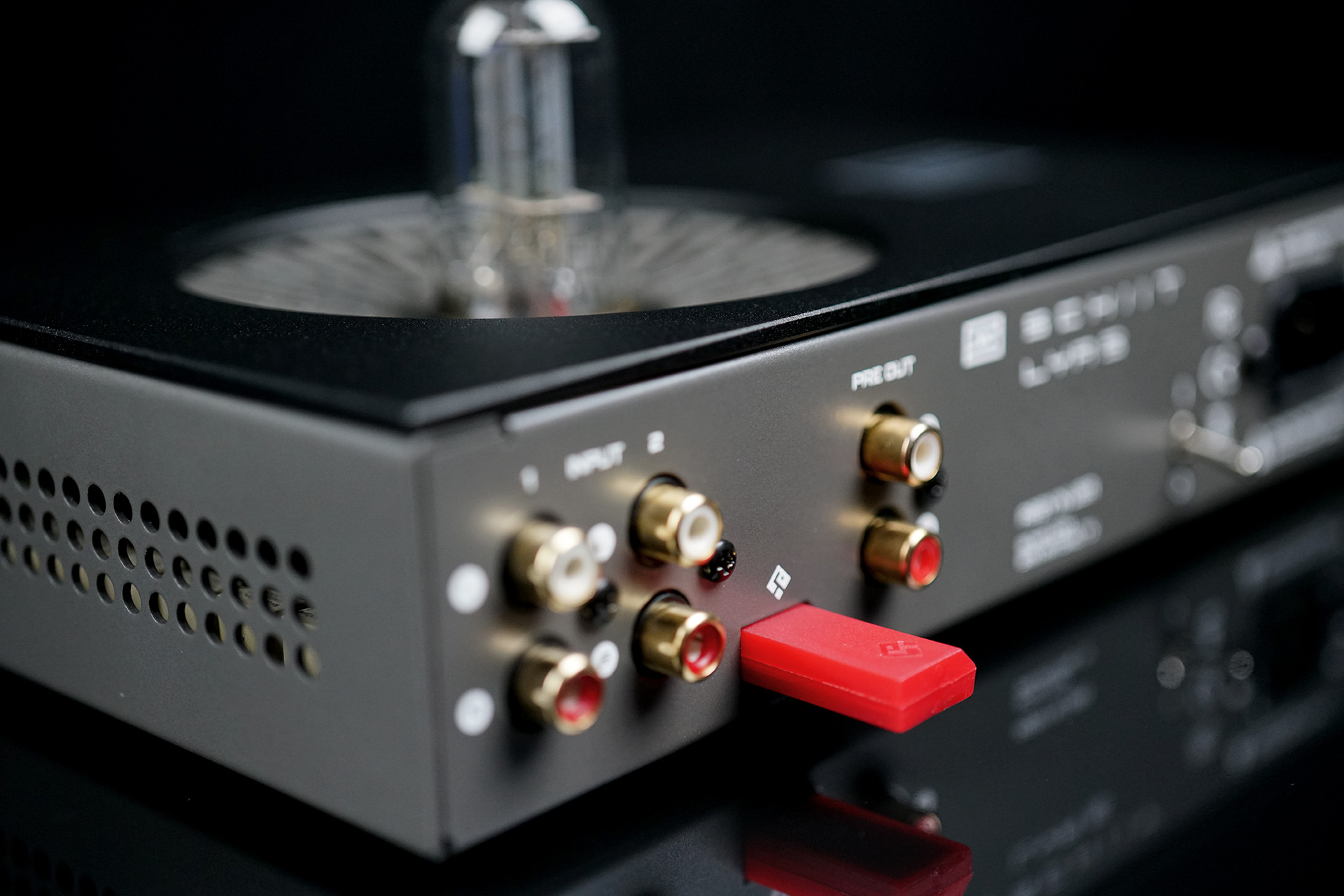
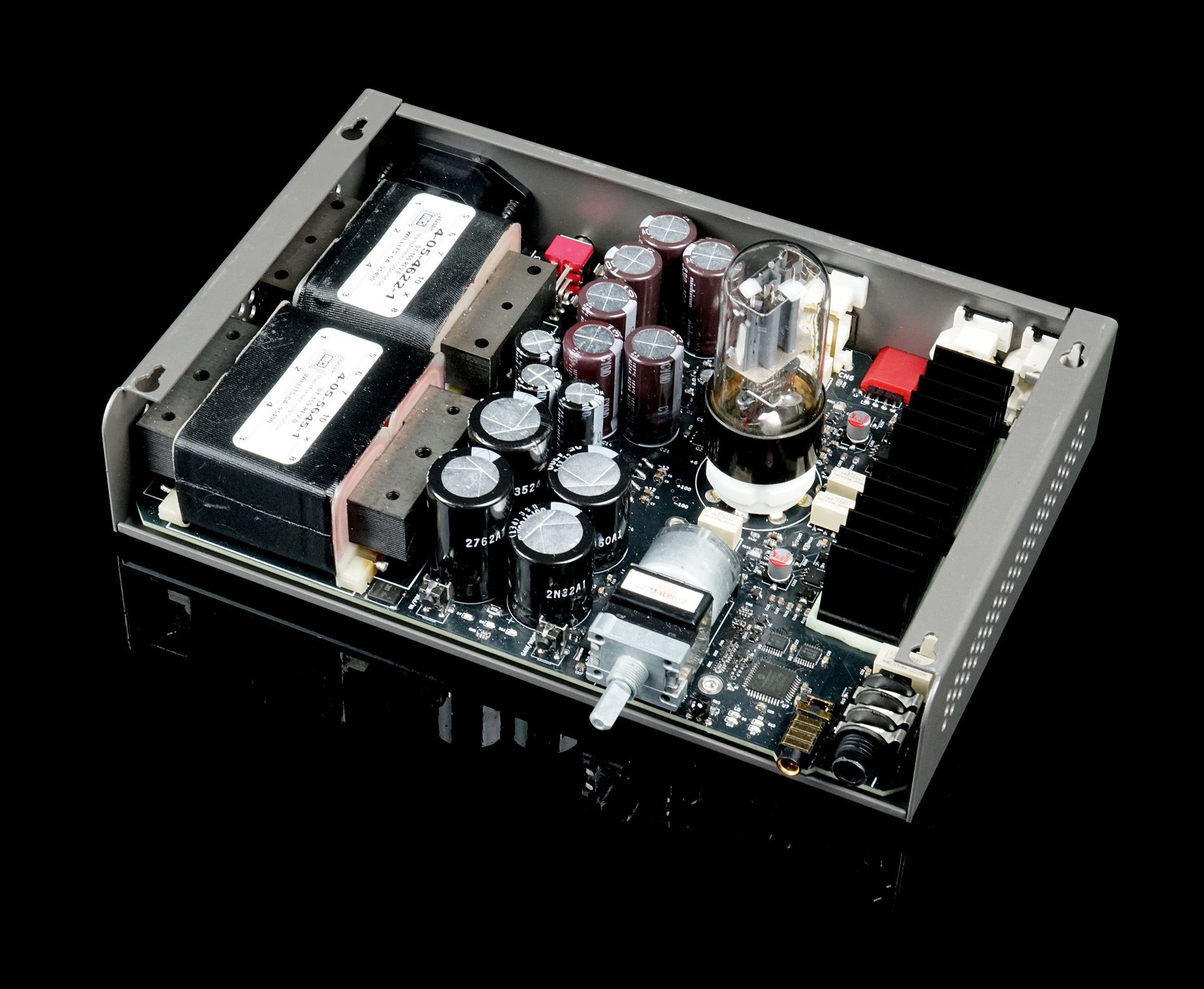
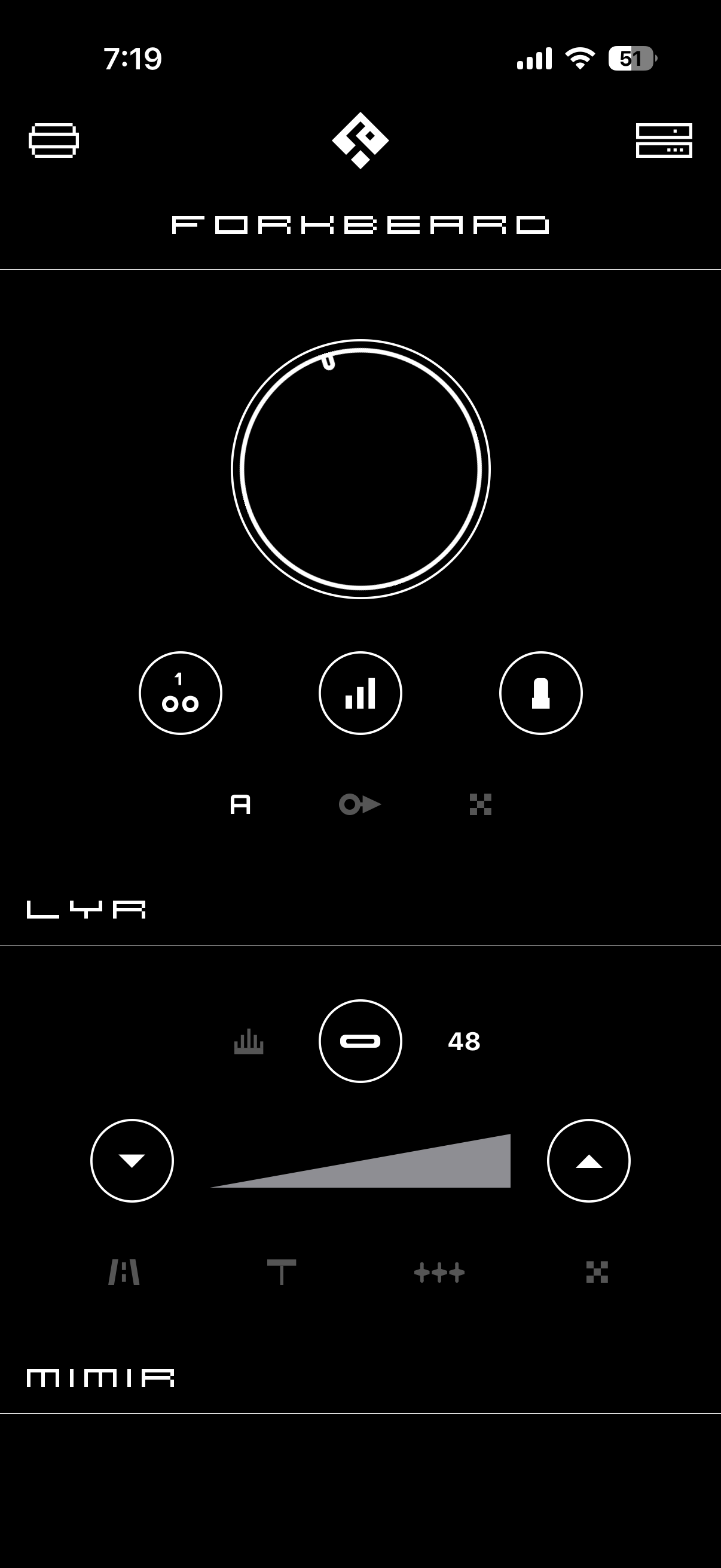
Want tube sound—and the comfort of solid state? Want real tactile controls—with the latest app-based control and integration? That’s Lyr 5, the only headamp that goes seamlessly from tube to solid state and combines the precision of relays with the intelligence of Forkbeard. I Can Live…With or Without TubeLyr 5 delivers exceptional tube sound. But, if you don’t want to use a tube, you can switch seamlessly to MOSFET gain. That’s a device that’s like a tube, but lasts virtually forever. And it’s built into Lyr 5. Even better, when you’re in solid state mode, the tube is completely powered down, extending its life. That’s the magic of Fusion™. Forkbeard Tour De ForceEver wondered if you are running in Class A, Class AB, or hitting the limits of your headphone amp? Lyr 5 tells you through Forkbeard. Forkbeard, our integrated control system, also gives you complete control over every Lyr 5 function, and provides advanced features such as Visual Volume when used with a Forkbeard-enabled DAC. More than Balanced PowerLyr 5 delivers up to 6000mW RMS through both the 4.4mm and ¼” jacks, so it doesn’t matter if you’re using balanced or single-ended headphones. The 4.4mm jack also includes our unique Halo mixed-mode motion feedback system, which can enhance acoustic performance. At the same time, advanced oversight including DC, overcurrent, temperature, and tube presence sensing ensures Lyr is safe for every headphone. Uber-High-End QualityGo ahead and pick up Lyr 5, and you’ll feel the difference between its two-transformer, 100% linear power supply and the rest. Then consider the relay ladder volume control, for ultimate transparency and perfect channel matching, full DC coupling from input to output, the use of quality MELF resistors, and separate regulated high-voltage and low-voltage supplies, and you’ll quickly understand: Lyr 5 is all-out high-end. Designed and Built in the USAWe do our own PCBs in Corpus Christi on our own dedicated production line, and our chassis and transformers are made by partners in California or Utah. From there, it all comes together in our San Antonio facility. So. Yeah. Actually made in the USA. 5-Year Warranty, Easy ReturnsLyr 5 is covered by a 5-year limited warranty that covers parts and labor. And if you don’t like your Lyr, you can send it back for a refund, minus 5% restocking fee, within 15 days of receiving it.
Specifications
SPECS THAT MATTER Power: plenty for all headphonesNoise: inaudible on all headphones and most IEMs in low gainDistortion: unmeasurable at normal listening levels; 10-100x lower than the typical headphones you're usingHeat: amp gets moderately warmSize: desk-friendly OTHER SPECS Solid State, Low Gain THD: < 0.002%, 20Hz-20KHz, at 2V RMS, 32 ohmsIMD: < 0.002%, CCIR at 2V RMS, 32 ohmsSNR: > 114db, unweighted, referenced to 2V RMSCrosstalk: < -80dB, 20Hz-20KHz, 32 ohmsOutput Impedance: 0.4 ohms, 2 ohms (Halo) Tube, Low Gain THD: < 0.003%, 20Hz-20KHz, at 2V RMS, 32 ohmsIMD: < 0.003%, CCIR at 2V RMSSNR: > 110db, unweighted, referenced to 2V RMSCrosstalk: < -80dB, 20Hz-20KHz, 32 ohmsOutput Impedance: 0.4 ohms, 2 ohms (Halo) Solid State, High Gain THD: < 0.003%, 20Hz-20KHz, at 2V RMS, 300 ohmsIMD: < 0.003%, CCIR at 2V RMSSNR: > 102db, unweighted, referenced to 2V RMSCrosstalk: < -80dB, 20Hz-20KHzOutput Impedance: 0.6 ohms, 2 ohms (Halo) Tube, High Gain THD: < 0.004%, 20Hz-20KHz, at 1V RMS, 32 ohmsIMD: < 0.005%, CCIR at 1V RMSSNR: > 95db, unweighted, referenced to 2V RMSCrosstalk: < -80dB, 20Hz-20KHzOutput Impedance: 0.6 ohms, 2 ohms (Halo) Preamp Output, Solid State THD: < 0.0003%, 20Hz-20KHz, at 2V RMSIMD: < 0.0003%, CCIR at 2V RMSSNR: > 115db, unweighted, referenced to 2V RMSCrosstalk: < -90dB, 20Hz-20KHzOutput Impedance: 75 ohms Preamp Output, Tube THD: < 0.0025%, 20Hz-20KHz, at 2V RMSIMD: < 0.002%, CCIR at 2V RMSSNR: > 110db, unweighted, referenced to 2V RMSCrosstalk: < -90dB, 20Hz-20KHzOutput Impedance: 75 ohms All Tube and Solid State Modes Frequency Response: 20Hz-20Khz, +/-0.1dbMaximum Power, 16 ohms: 9.0W RMS per channelMaximum Power, 32 ohms: 6.0W RMS per channelMaximum Power, 50 ohms: 4.0W RMS per channelMaximum Power, 300 ohms: 900mW RMS per channelMaximum Power, 600 ohms: 450mW RMS per channel Gain: High 6.5 (16dB), Low 1.2 (1.35dB) Topology: Coherence ™ fully discrete, current-mode noninverting 6SN7/bipolar hybrid with Continuity A™ output stage and Fusion Architecture™ tube or solid-state gain, 64-step relay ladder volume control Protection: microprocessor oversight for high DC, over-current, and tube presence; mute on any fault and management of tube and solid state modes Convenience: tube is shut off when amp is in solid state mode (no heater, no HV rail) IR remote control: included Forkbeard capabilities: Forkbeard requirements: iOS or Android device, see schiit.com/forkbeard Power Supply: 100% linear, two internal power transformers with 72VA total rating, plus with over 55,000uf of filter capacitance; two discrete regulated +/-100V supplies, two high-current +/-26V supplies, four regulated oversight supplies—20V, +/-15V, 5V Power Consumption: 30W Size: 9 x 6 x 2” Weight: 6 lbs APx555 Report for Lyr 5
FAQ
Wait a sec. This amp tells me if it’s running in Class A?Yes. That is, assuming you’re using the Forkbeard app. It’ll let you know if you’re running in Class A, AB, or if you’re hitting the limit. No guessing. And you’ll be surprised at how many headphones run in Class A all the time, even ones people think are very hard to drive. That’s pretty cool, is that all Forkbeard does?No. Here’s the full list: Complete remote control of all Lyr 5 functions, including input select, gain select, mode select, preamp output enable, and volume Reporting of system health, including overtemperature and over-current alerts Reporting of output stage status, from Class A to clipping Integration with all of our other Forkbeard-enabled products, for complete control of your system on a single device Multi-system control, for those who have more than one system in your home Advanced functionality such as Visual Volume, showing complete system capability in real time with alert ranges on the volume control Holy moly, that sounds pretty cool! And unlike anything else out there.Yep, that’s why it’s patent pending. And this comes standard with Forkbeard?We provide the module with every Lyr 5, yes. I don’t want none of this app stuff, what about me?We also provide an IR remote control. Also, all functions are available via real, tactile switches and knobs on the front panel. I don’t want none of this crazy modern stuff, give me a tube amp that’s hand-wired!You are free to find a time machine and go back to 1950 or so. Have fun. Invest in, ah, heck, we don’t know. General Motors? Is Lyr 5 a Lyr+ with Forkbeard?No. Despite the visual similarity, it’s a completely different amp: New higher-capacity power transformer for HV and heater supplies New tube sleep mode capability—if you’re not using the tube, both the heater and HV rails are off, preserving tube life safely Substantially revised UI, with both white and orange LEDs reflecting the mode Added 4.4mm TRRRS jack with Halo™ mixed-mode motion feedback Continuity A™ output stage Significant revisions to Coherence™ topology, including higher-quality MELF resistors and film/silicon/NPO capacitors, as well as improved operating servo Completely different metal—top, top insert, and bottom Forkbeard compatibility Wait. Back to basics. You say this is a tube or solid state amp?Yes. You can switch from tube gain to solid-state gain. So it has separate tube and solid state stages?No. It has what we call Fusion™, which swaps out the tube for depletion-mode MOSFETs (a solid state device most like a tube) in near-real-time. The rest of the circuit stays the same. So you’re either hearing tube gain, or MOSFET gain. And if I’m not using the tube, the tube is off?Right. The heater is off and the high-voltage rails are disconnected, so the tube is totally safe. What sounds better, tube or solid state?You tell us. Ah come on!Here’s the thing: we try not to comment too much on how things sound. That’s for you to say. What we can say is that a depletion-mode MOSFET operates most like a tube. And, to us, it sounds pretty darn good. It’s a great backup plan for when you’re waiting for your new tube to arrive. Wait, tubes go bad?Everything goes bad eventually. Look at the Roman Empire. Ah, there’s that snarkiness! Do you have a more serious answer?Yes. Tubes are usually rated to last 5,000 hours or so. Which means if you listen for 4 hours a day, every day, you’re about 3 years away from having to worry. Will tubes eventually disappear?Everything eventually disappears. Look at Zima. Zima? WTF?Believe me, you aren’t missing anything. Seriously, do I have to worry about tube supplies?No. Despite pronouncements of tube unavailability, you won’t have any problem buying a new tube (or 4, or 10) for the foreseeable future. Unless the sunspots keep peaking and there’s a Carrington Event again. Then maybe you’ll be happy you have those tubes? Do I have to pull the tube out to switch modes?No. If you have a tube installed, you can switch between tube and solid state modes via the front panel button (long press, 5 seconds), or with the remote, or via Forkbeard. So why not balanced?You tell us where to put the balanced connections and supporting circuitry, and we’ll make it happen. Seriously?Come on, look at the chassis. It’s full. Sorry, if you want balanced, we have Jotunheim 3, which is an amazing headphone amp and preamp in its own right. It even takes an internal Mesh™ DAC card with Forkbeard, for a one-chassis system. What is Coherence™?This is our unique current-mode, noninverting tube/BJT hybrid topology that eliminates the need for input, output, or interstage coupling capacitors. That means you’re hearing the tube, not the capacitors. What about Continuity A™?Lyr 5 has high standing bias, and can go out of Class A. Continuity A addresses the NPN and PNP device mismatch, with 6 NPN and 6 PNP devices on either side of the rails, with 4 conducting the same all the time. This is significantly different than the original Continuity approach, and, as far as we know, it’s the only topology that addresses the NPN and PNP device mismatch. Can you explain what NPN and PNP mismatch are to person who isn’t a giant engineering nerd?A bit. Here’s the thing. Most amps use what are called “complementary” transistors—two different types, one for each side of a voltage rail. NPN usually goes on the positive rail, PNP on the negative rail. The problem is that calling these devices “complementary” is, ah, being a bit polite. They’re made with two entirely different physical processes. So their properties are not exactly complementary. And, if you can’t get exactly complementary devices, the best way to make them work that way is have them both running at the same time, all the time. Which takes some trickery. That didn’t help.Sorry. Unfortunately, some engineerese is necessary for what we do. Let’s talk practicality. Is this quiet enough for IEMs?Many of them, in low gain mode. And it has enough power for……any headphone, yes. You know this sucker runs warm, right?Yes, about 10W more at idle than Jotunheim. This is well within the capability of the parts we’re using, so there you go. What is Lyr?In Norse mythology, Lyr is Menglad’s hall in Jotunheim, land of the giants.