Vestri
The Only Mesh™ Portable
$99.00
In stock
Description
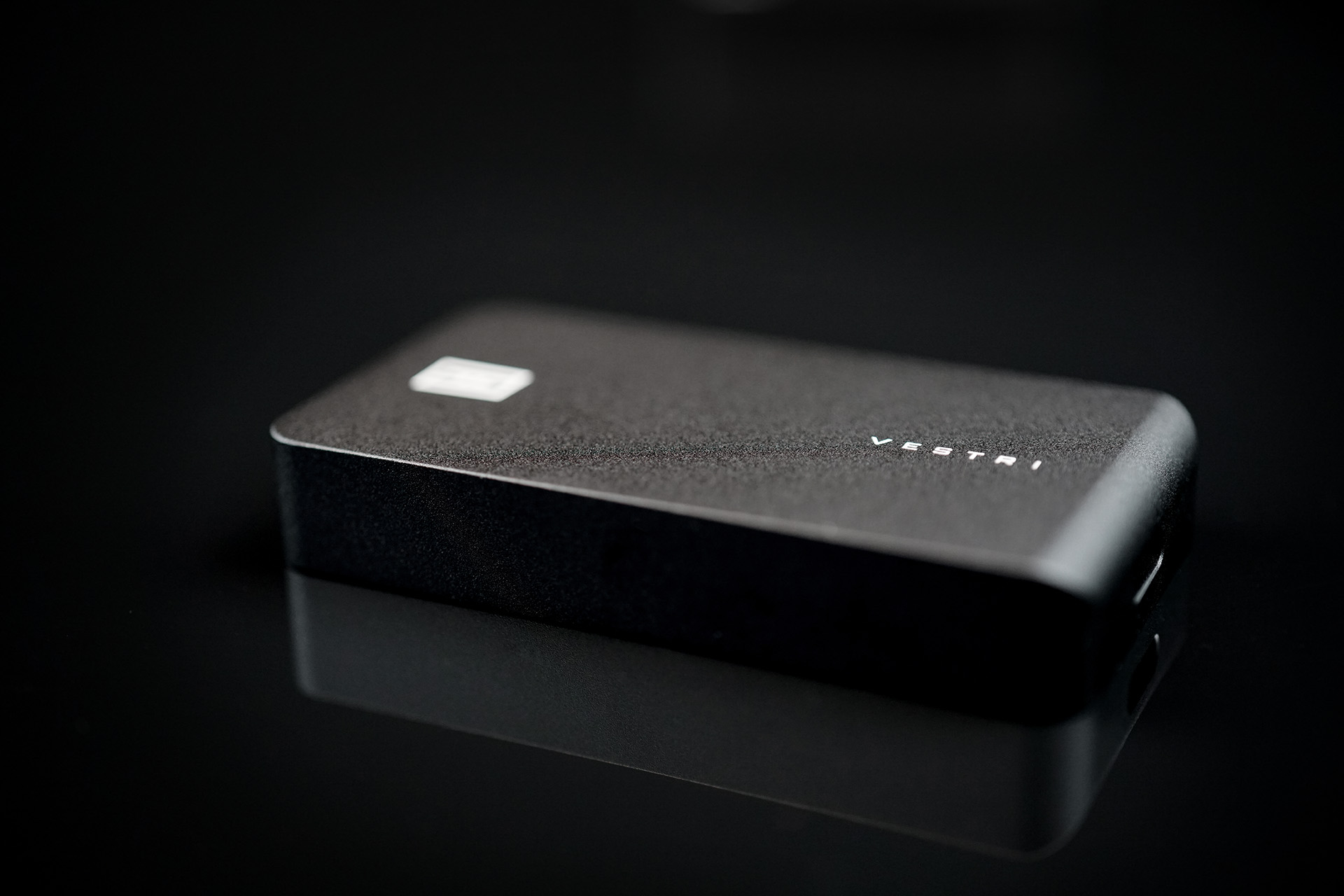
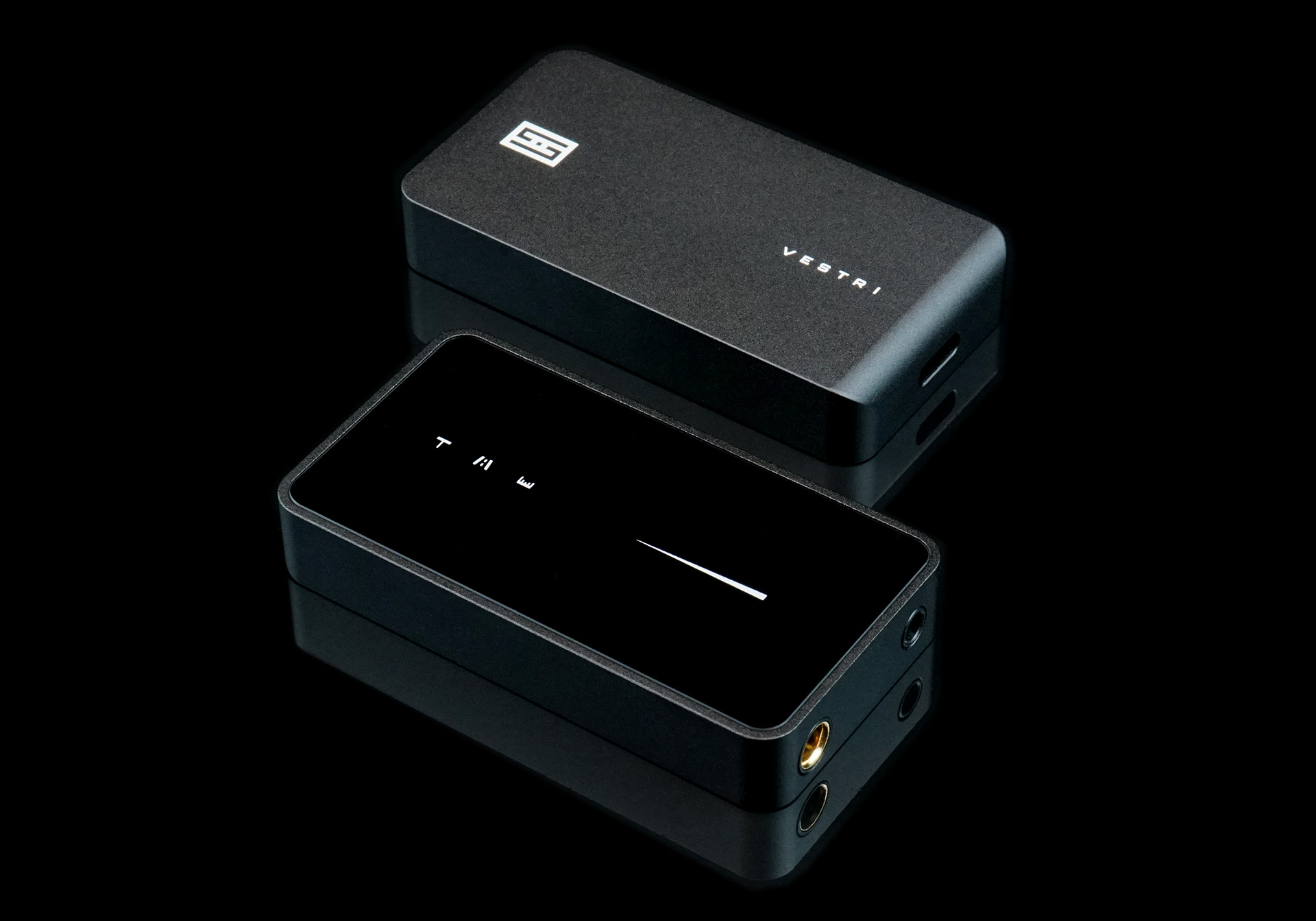
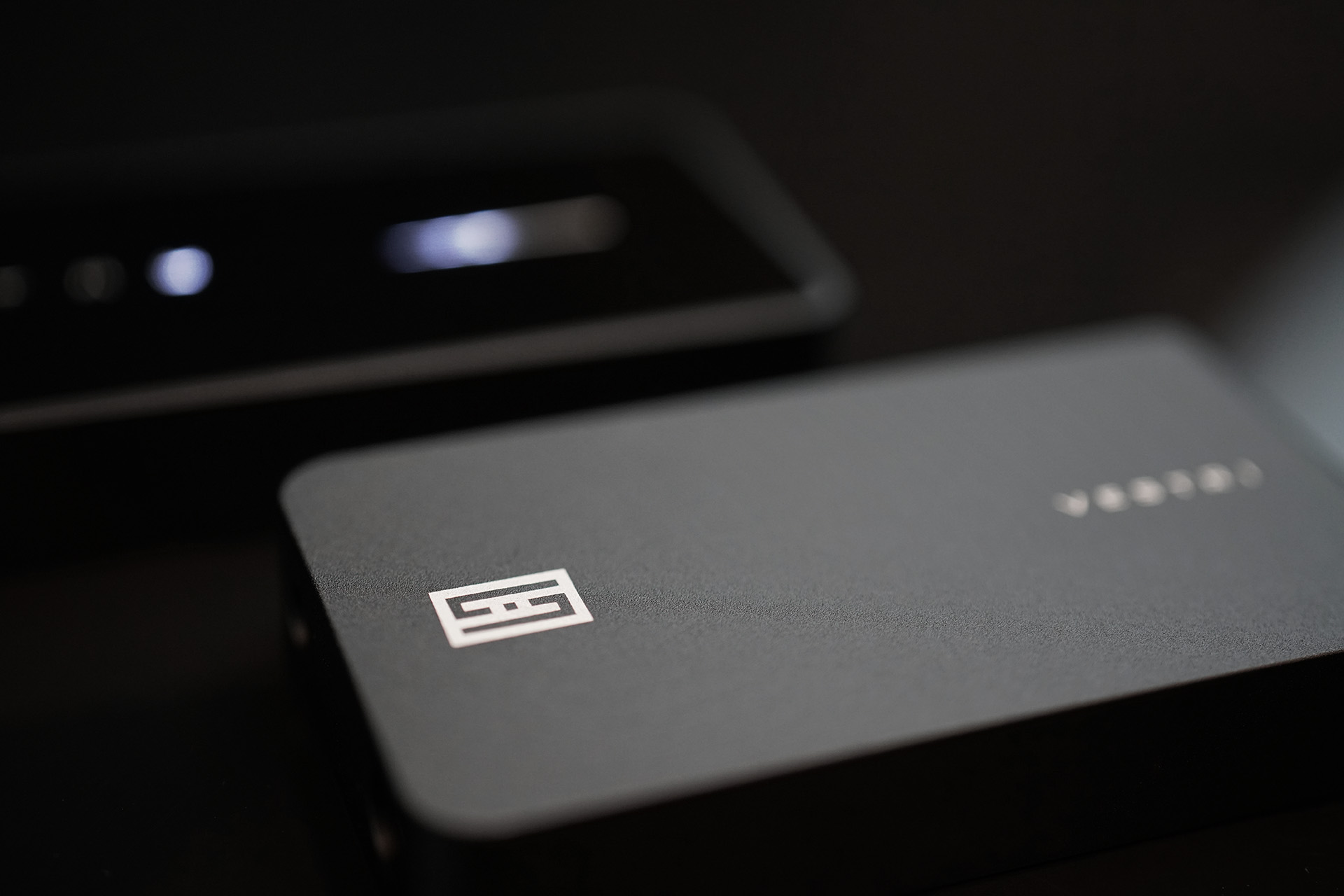
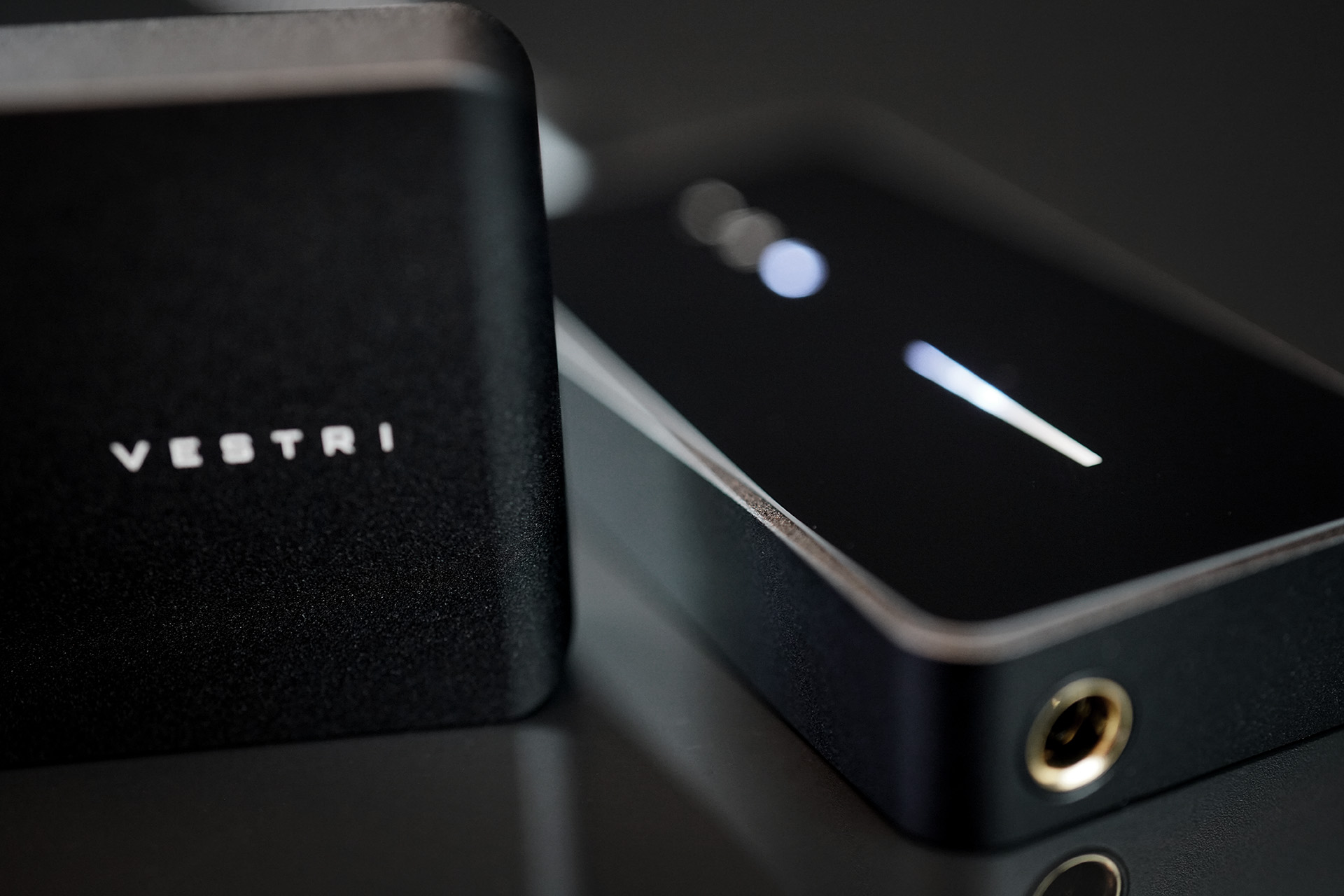
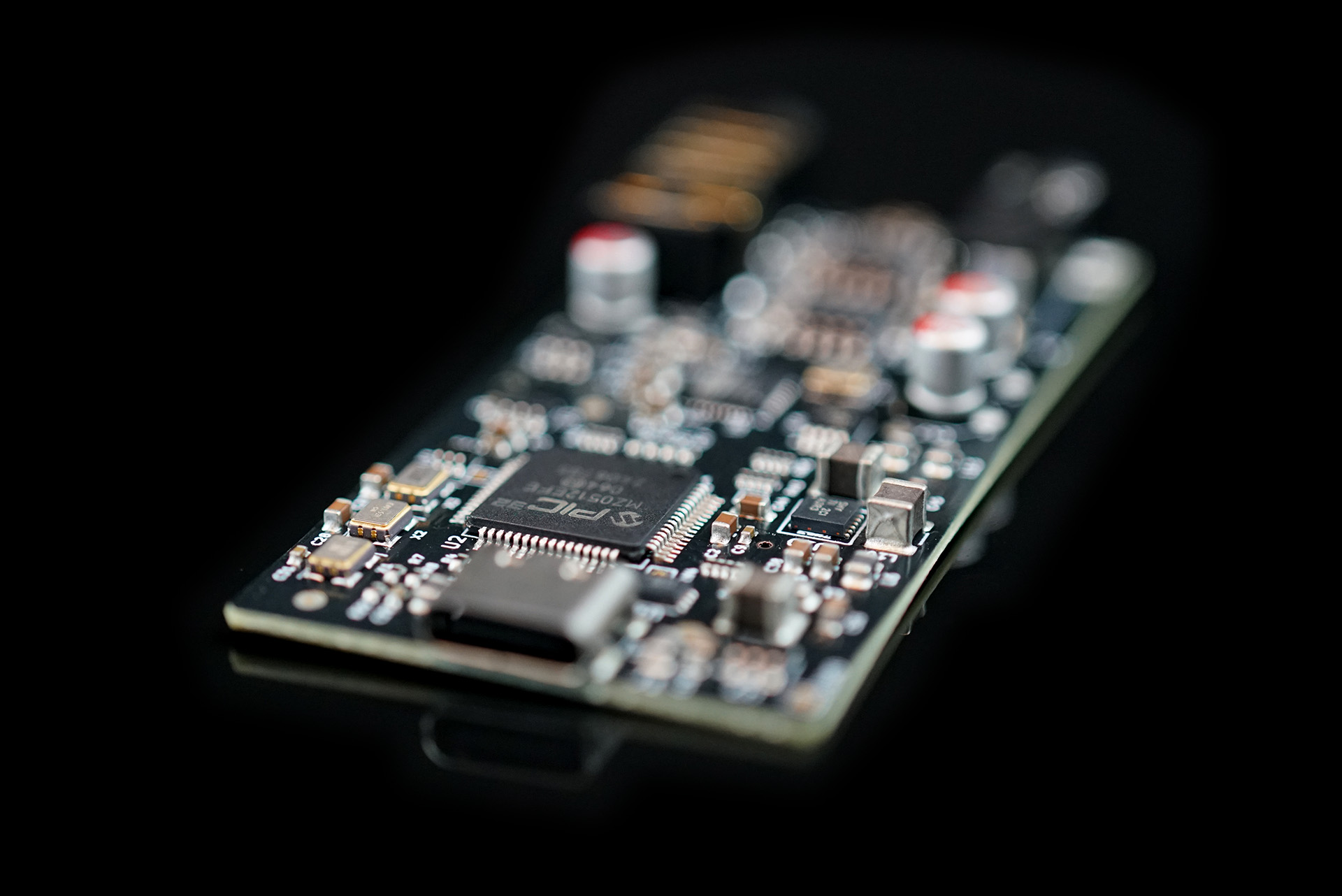
Just another dongle? No. Vestri is the world’s only Mesh™ portable. Dressed in a milled aluminum and glass chassis with no moving parts and a screen that’ll last an eternity, it delivers the power and features you need to enjoy your music anywhere. The Connections and Power You NeedConnect your phone, tablet, or computer to Vestri’s USB and it’s ready to go with both 4.4mm balanced or 1/8” single-ended headphones. Vestri delivers up to 400mW from balanced, easily handling hard-to-drive cans. Unique Tech for Best SoundVestri may be small, but it includes Schiit’s industry-leading Unison USB™ interface and Mesh™ digital to analog conversion. This means you get ultra-stable, super-high-quality USB input and our unique time- and frequency-domain optimized digital filter for unparalleled sonics. Thoughtful Touch FeaturesTouch to turn volume up, touch to turn down. Touch to select Loudness for sound at low volume, Invert to improve bad digital recordings, and NOS mode. Vestri has no moving parts, and a “eternal screen” with individual LEDs under glass that will never dim or burn in. Designed and Built in the USA. For Real.By “designed and built in the USA," we mean it. We design our products with a complete in-house team that includes analog, digital, firmware, and DSP capabilities. We even make our own PC board assembly on a state-of-the-art robotic assembly line in Corpus Christi. There’s no other company in the US as vertically integrated as us. Industry-Leading 2-Year Warranty, 15-Day Easy ReturnsReliability? Relax. Vestri is covered by an industry-leading 2-year limited warranty. And if you don’t like your Vestri, you can send it back for a refund, minus 15% restocking fee, within 15 days of receiving it.
Specifications
SPECS THAT MATTER Power: plenty for most headphones except a handful of the hardest-to-drive onesNoise: inaudible on all headphones and IEMsDistortion: unmeasurable at normal listening levels; 1000x lower than the typical headphones you're usingHeat: gets slightly warm (don't be a baby, it only draws 1W, seriously)Size: Tiny, portable OTHER SPECS Frequency Response: 20Hz-20Khz, +/-0.05db Balanced 4.4mm Output Maximum Power, 32 ohms: 400mW RMSMaximum Power, 50 ohms: 320mW RMSMaximum Power, 300 ohms: 120mW RMS SE 1/8” Output Maximum Power, 32 ohms: 200mW RMSMaximum Power, 50 ohms: 150mW RMSMaximum Power, 300 ohms: 40mW RMS Either Output THD: <0.0002%, 20Hz-20KHz, at 3V RMS SE, 6V RMS balanced IMD: <0.0003%, CCIR SNR: >118db, A-weighted, referenced to 2V RMS Crosstalk: >-80dB, 20Hz-20KHz Output Impedance: less than 0.5 ohms USB Receiver: Schiit Unison USB™ D/A Conversion: Schiit Mesh™, a unique combination of our time- and frequency-domain optimized digital filter and a standard delta-sigma modulator, in this case an ES9018 Sample Rates and Bit Depths: 16/44.1 to 32/192 Outputs: 4.4mm balanced output1/8” single-ended output Analog and output Stage: TI OPA1656 x 2 Power Supply: USB powered, with +/- 5V rails via high-current dual-polarity switching regulator, with inductor filtering and local regulation Controls: volume, NOS, invert, and Loudness, all accessible via capacitive touch buttons under glass Power Consumption: 0.9W typical Size: 2.4 x 1.4 x 0.44” Weight: 4 oz APx555 Report for Vestri
FAQ
How is this different than the 10,000 other dongles out there?How is a Corvette different than a Camry? How is an iPhone different from $98 no-name Android phone you found in the depths of Amazon? I don’t get your answer.In both cases, it’s a matter of design and intent. We held off on doing a portable DAC/amp for many years because we didn’t feel that we could do something special. Sure, we could have taken the DAC-chip-of-the-day and put it in a tiny box with an OLED display and some buttons or a twisty knob, but that would literally be like everyone else. We don’t do things for the sake of me-too. We do things when we think we have something unique, something that can add to the options you have available. And now you do?Yes. With Mesh™ digital to analog conversion, Unison USB™, and thoughtful design (like no moving parts and an eternal screen), we think we have a portable worth considering. What’s Mesh?Mesh is our way of bringing our unique, time- and frequency-domain optimized digital filter to smaller, more affordable DACs. You see, all Schiit DACs from Bifrost on up have all used our own unique math, developed over decades, implemented on a costly Analog Devices DSP. That’s the filter that Mike Moffat called “megacomboburrito,” and it’s an important part of how our DACs sound. Now, we’ve figured out a way to bring this filter to more affordable products by implementing it in the 32-bit Unison USB microprocessor, and combining it with a standard delta-sigma modulator for a unique digital to analog conversion method. I only understood a bit of that.Sorry. Look at it this way: other DACs use the built-in digital filters of the D/A converters they are using. We use our own. Why?Because we believe our own digital filter is truly unique, and the best sounding filter on the planet. You can verify it for yourself, because we also included an NOS mode on this DAC, so you can run your own digital filter and send the data straight to the modulator. Go ahead and try it. Make your own decisions. What’s Unison USB?Like a lot of what we do, it’s not off the shelf. It’s our own USB interface designed to do a single thing well: to interface seamlessly with modern UAC2-compliant devices. It’s really the best way of getting audio from your phone, tablet, streamer or computer to this DAC. Is this the high-speed Unison 384?No. It’s limited to 32/192, in order to reduce power draw. We figured you’d enjoy a portable that doesn’t drain your phone as much, and can still play literally every track on every major high-res streaming service, than some bragging right that you can play DXD content. What is this “eternal screen” thing?The sad truth about OLED screens is they dim over time, and are frequently treated as a “wear component.” We use individual lighting-style LEDs run very, very conservatively, so they’ll last almost literally forever. It’s a small thing, but we want to build for the next generation, not just the next sale. “For the next generation, not the next sale” are pretty words, but I notice this device has a 2-year warranty, where your other stuff goes up to 5.Yep. Because it’s a portable device, we know you might drop it in the sand. Or your coffee. Sorry, that’s just being realistic. And it’s not like we can hermetically seal something with 2 giant holes for headphones in it. Nor is it possible to have self-cleaning headphone jacks (though they are super-high-quality, gold-plated parts). You say “portable,” but does it have a battery?No. No battery. We say “portable” because Vestri is tiny enough to carry with you everywhere, and can easily be powered by any USB-C phone or tablet.Any phone or tablet is OK? Any USB-C native phone or tablet. Apple's Lightning connector doesn't allow enough power to run Vestri. But this can also be used with a computer?Yes. Phones, tablets, computers, streamers—basically anything that has a UAC2 compliant output. UAC2, finalized literally before we were a company (in 2009) is the world standard for transmission of digital audio via USB. It’s supported by virtually all modern devices.Do you provide a cable? Yes, we provide a short USB-C to C cable with Vestri. Do you guys make the board for this yourselves?Yes, Vestri is made on our own in-house SMD line in Corpus Christi, Texas. Didn’t you guys make a portable like this, ages ago?No, not like this. The original Fulla was smaller, simpler, and featured a physical volume knob attached to a real potentiometer, back in the ancient days when that seemed like a good idea for a portable. We also played with another design we called the Svala, getting far enough to do a chassis for it, but we decided the performance wasn’t good enough for us. Vestri is a clean-sheet design, unrelated to either of those. What’s a “Vestri?”In Norse mythology, Vestri was one of the 4 dwarves that held up the sky. Yeah. Dwarfs holding up the sky sounds a bit claustrophobic, but there you go.
Reviews
Schiit Audio Vestri Portable
Audiophile Style, Chris Connaker
"The Vestri is different, just like Schiit Audio is different. The company designed, and manufactured Vestri on its own in-house SMD line, in Corpus Christi, Texas. Made of milled aluminum and glass, Vestri feels different. Designed with Schiit’s Mesh digital to analog conversion, custom filtering, and Unison USB, Vestri sounds different. Featuring a removable USB cable and individual LEDs under the glass, that will outlive you and your pet tortoise, Vestri is for those of us who value distinctions with differences”.
Schiit Audio Vestri PortableDid Schiit just blow away all other portable DACs?
Currawong
"Schiit Audio surprised everyone by releasing the Vestri portable USB audio DAC/amp at CanJam Singapore. More surprising is that for US$99 they may have outdone the sound quality of every other portable DAC/amp out there. But it's what you don't get, as much as what you do get, that makes the Vestri unique."
Schiit Vestri USB Dongle
Super Best Audio Friends, purrin
“At $99, Vestri delivers unusually “grown-up” sound quality and value in its niche - 'nuff said.”
Schiit Vestri USB DongleSchiit Vestri Dongle DAC/Headphone Amp Review - The Least Embarrassing Way to Schiit on the Go!
WaveTheory
"Let's get to the sound. It’s fantastic. Probably the best dongle I’ve ever heard"